Comparing Fees, Taxes, and Time Costs Between Long-Term Investing and Short-Term Trading
What Remains After the Headline Return
Long-term investing and short-term trading are often compared by looking at potential returns. That comparison is incomplete. A strategy that produces more profit before expenses may leave less money in the investor’s account after trading costs, taxes, financing charges, and the time required to manage it.
The difference becomes especially important for investors in South Korea because Korean tax rules do not follow the simple assumption that every short-term stock gain is taxed more heavily than every long-term gain. Tax treatment varies according to the asset, the market where it is traded, the size of the investor’s holding, and whether the transaction takes place on or outside an exchange.
For that reason, the practical question is not whether investing or trading has the higher gross return. It is which approach produces the stronger result after all unavoidable costs have been deducted.
Trading Frequency Changes the Cost of Every Return

The clearest difference between the two approaches is the number of transactions involved.
A long-term investor may buy a diversified ETF, fund, or group of shares and hold them for several years. A short-term trader may enter and exit positions every week, every day, or several times during the same session. Each additional transaction creates another opportunity for costs to reduce the return.
Brokerage commissions are only one part of that expense. Many brokers advertise low or zero commissions, but trading is rarely completely free. Investors may still face exchange-related charges, currency-conversion costs, securities transaction taxes, bid-ask spreads, and differences between the expected execution price and the actual price received.
The bid-ask spread matters because buyers generally enter at the higher ask price and sellers exit at the lower bid price. In highly liquid securities, the gap may be small. In thinly traded shares, foreign securities, small-cap stocks, or volatile markets, it can become much wider.
A long-term investor usually absorbs this spread when opening the position and again when eventually selling it. A frequent trader pays it repeatedly. A strategy that earns small amounts on many trades therefore has less room for error because even modest execution costs can consume a meaningful share of each gain.
Trading frequency also affects securities transaction tax in Korea. This tax is generally tied to the sale transaction rather than to whether the investor made an overall profit. Following the abolition of the planned financial investment income tax, the government restored securities transaction tax rates toward their earlier level, including adjustments for KOSPI and KOSDAQ transactions. This means frequent selling can create recurring tax costs even when the investor’s net trading performance is weak.
The effect is easy to overlook because each deduction appears small. What matters is how many times it is repeated over a year.
Korean Stock Taxes Do Not Depend Only on the Holding Period
One of the biggest problems in many comparisons is the claim that South Korea taxes short-term stock gains at a higher rate than long-term gains. That statement is too broad.
Korea does not apply one universal rule under which every share held for less than a year receives a short-term tax rate and every share held longer receives a lower rate. Different rules apply to domestic listed shares, unlisted shares, overseas shares, derivatives, funds, dividends, and other investment products.
For many ordinary individual investors selling domestic listed shares through the exchange, capital gains are not taxed in the same way as they are for major shareholders. The National Tax Service identifies the main domestic share-reporting groups as major shareholders selling listed shares, small shareholders selling listed shares outside the exchange, and shareholders selling taxable unlisted shares.
The major-shareholder test is based on ownership and value thresholds rather than on how often a person trades. For transactions covered by the National Tax Service’s 2026 guidance, the listed-share thresholds included ownership of at least 1% on KOSPI, 2% on KOSDAQ, or 4% on KONEX, or holdings with a market value of at least KRW 5 billion under the applicable test.
Once a shareholder falls within a taxable category, the applicable rate can depend on factors such as whether the company is a small or medium-sized enterprise, the amount of the taxable gain, and, in some cases, the holding period. The National Tax Service’s rate table shows that certain shares of non-SME companies held by major shareholders for less than one year can be subject to a 30% rate. However, this is a specific rule for a defined category, not evidence that every Korean trader pays a higher tax whenever a position is closed within one year.
This distinction changes the comparison between investing and trading. A typical retail investor should not assume that holding a domestic listed stock for twelve months automatically unlocks a lower capital gains rate. The investor must first determine whether that gain is taxable at all under the rules applying to that transaction.
Overseas Shares Create a Different Tax Calculation
Korean residents investing in overseas shares face a different framework from investors trading ordinary domestic listed shares.
The National Tax Service treats qualifying gains from overseas shares as taxable capital gains. Investors may therefore need to calculate annual gains and losses, deduct eligible acquisition and transaction costs, apply the available basic deduction, and file when required.
For this category, frequent trading can increase the administrative workload substantially. Each purchase and sale affects the cost basis, realized gain or loss, and supporting records. Currency conversion also matters because the taxable result must be determined under the applicable Korean reporting rules rather than by looking only at the profit displayed in a foreign brokerage account.
Losses and gains from relevant overseas share transactions during the same tax period may affect the final taxable amount, but investors should not import the American wash-sale rule into a Korean tax calculation without checking the Korean provisions that actually apply. The original article incorrectly treated the U.S. wash-sale rule as though it were a central limitation for investors in South Korea.
The more active the overseas trading account becomes, the harder it is to reconstruct the figures at filing time. Long-term investors generally have fewer lots, fewer exchange-rate calculations, and fewer records to reconcile. Active traders may need detailed brokerage statements or tax software simply to determine their actual result.
Investment Products Can Be Taxed Differently From Direct Shares
Investment returns are not always taxed the same way. Capital gains, dividends, interest, ETFs, mutual funds, and overseas investments may each follow different tax rules depending on the product and the investor’s circumstances. Criteria for Comparing Dividend Stocks and Dividend ETFs Based on Taxes, Diversification, and Payment Frequency can help investors compare dividend-focused products while considering how taxes, diversification, and distribution schedules affect the overall result.
As a result, two investors with the same market return can end up with different after-tax results. The type of asset and the account used can be just as important as the holding period or trading frequency when comparing long-term investing with short-term trading.
Time Has a Cost Even When It Never Appears on a Statement
Brokerage statements show commissions, taxes, and interest. They do not show the value of the investor’s time.
Short-term trading may require market preparation, company research, chart analysis, order entry, position monitoring, recordkeeping, and post-trade review. A person who spends 15 hours a week on these tasks is committing hundreds of hours each year.
The simplest way to estimate this cost is to assign a reasonable hourly value to the time and compare it with the strategy’s net profit. The hourly value does not need to equal the investor’s salary exactly. It can represent overtime that was not worked, freelance projects that were declined, professional training that was postponed, or leisure that the investor considers valuable.
Suppose an investor spends 500 hours a year trading and earns KRW 5 million after direct expenses and tax. The return on time is KRW 10,000 per hour before considering the capital placed at risk. That may still be worthwhile for someone who enjoys trading, but it is a very different result from simply stating that the account made KRW 5 million.
Long-term investing is not effortless. Investors still need to select suitable assets, review allocation, rebalance when necessary, and respond when their goals or financial situation change. The difference is that these tasks are usually periodic rather than continuous.
Compounding Depends on What Stays Invested
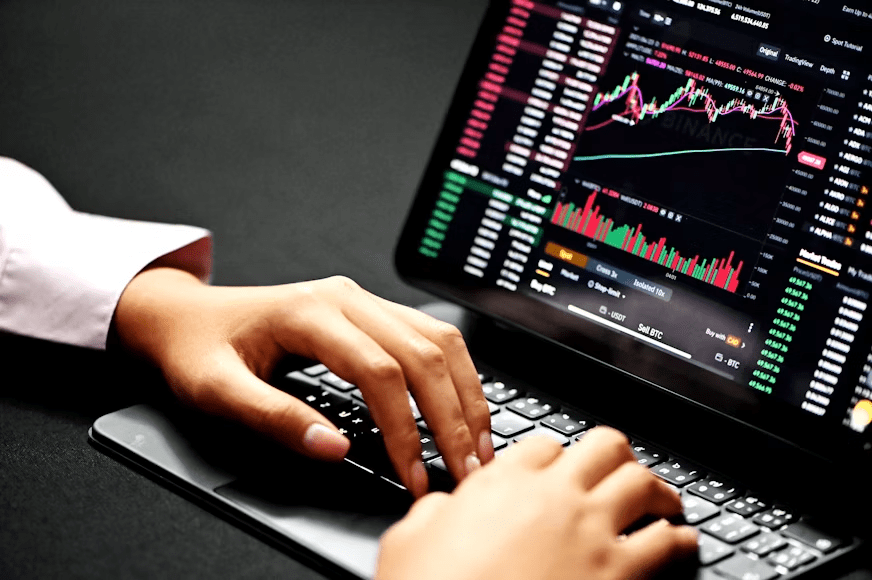
Both long-term investors and short-term traders can benefit from compounding, but repeated costs reduce the amount of capital that remains invested. Long-term investing generally involves fewer transactions, allowing more of the portfolio to stay invested over time. Frequent trading, on the other hand, creates recurring costs such as trading fees, taxes, spreads, and financing expenses that can reduce the capital available for future growth.
This does not mean active trading cannot outperform. It simply means any additional return must be high enough to offset these extra costs. To compare the two approaches fairly, always evaluate returns after all fees, taxes, and other trading expenses have been deducted.
For investors in South Korea, tax should be calculated according to the actual product and transaction. Domestic listed shares, major-shareholder holdings, unlisted shares, overseas shares, funds, dividends, and derivatives do not all follow the same rules. Holding an asset longer may reduce trading costs and administrative work, but it does not automatically create a universal Korean long-term capital gains tax advantage.